Off the GraphFishing Academy
The Academy curriculum

Build a process for finding bass.

Whether you are new to bass fishing or struggling to find fish, start with the fundamentals and build through 13 connected modules. Put the ideas to work with four interactive Labs, quizzes, and your fishing notebook.

13
Total Academy modules
13
Course modules
4
Interactive Labs
$20
One-time access
Academy curriculum13 connected modulesFour interactive LabsOne payment for lifetime access
Start here

Build the foundation first.

Begin with a practical introduction to the Academy, then study bass as animals before moving into forage, habitat, water systems, and execution.

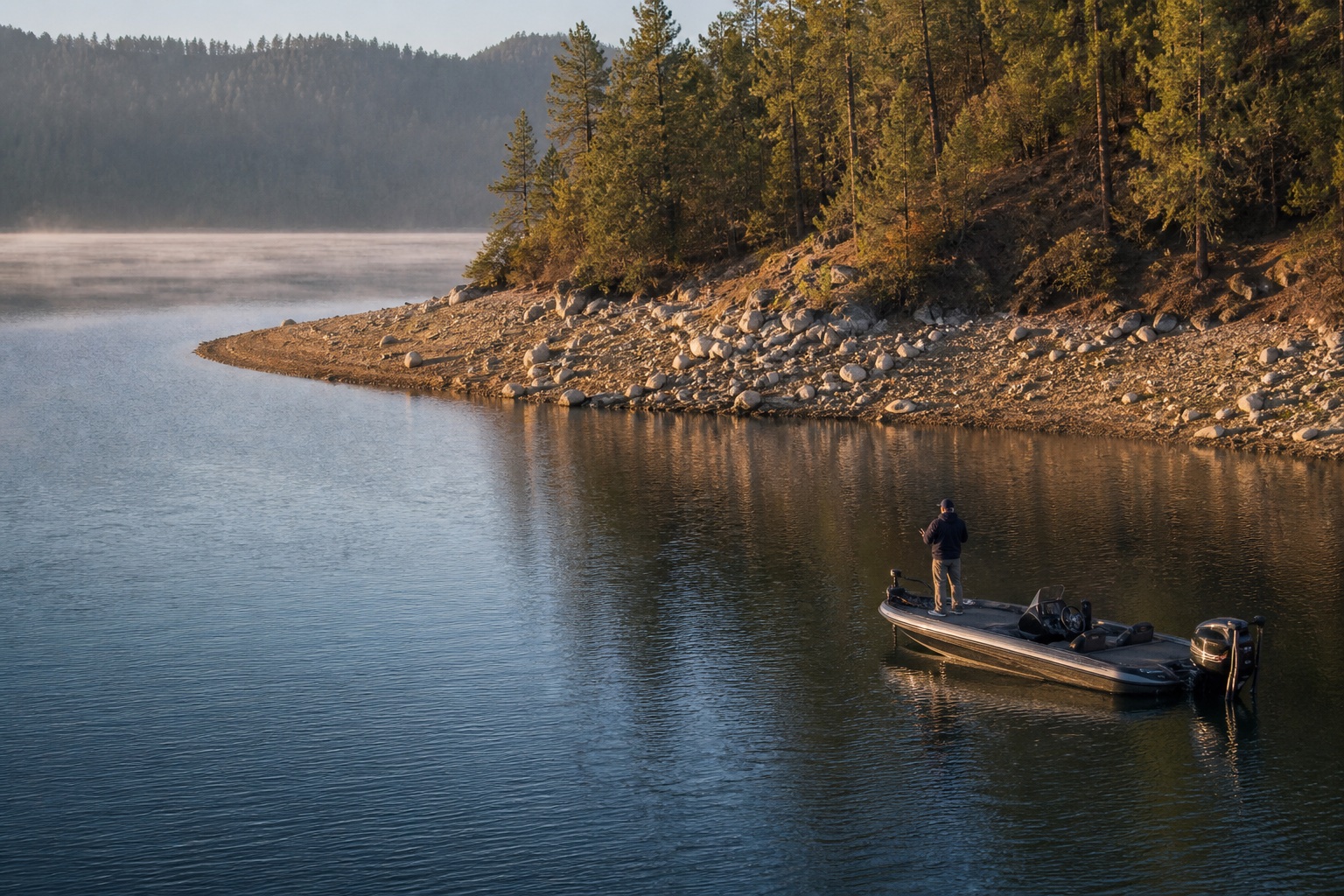
Angler fishing a rocky point from a bass boat on a large lake
Module 01 | Recommended sequence

Fishing Decision Foundations

Establish the practical decision framework that connects the rest of the Academy.
  • Pattern fishing
  • Fishing decision fundamentals
  • Building a useful starting plan
  • Separating observations from assumptions
Start this module
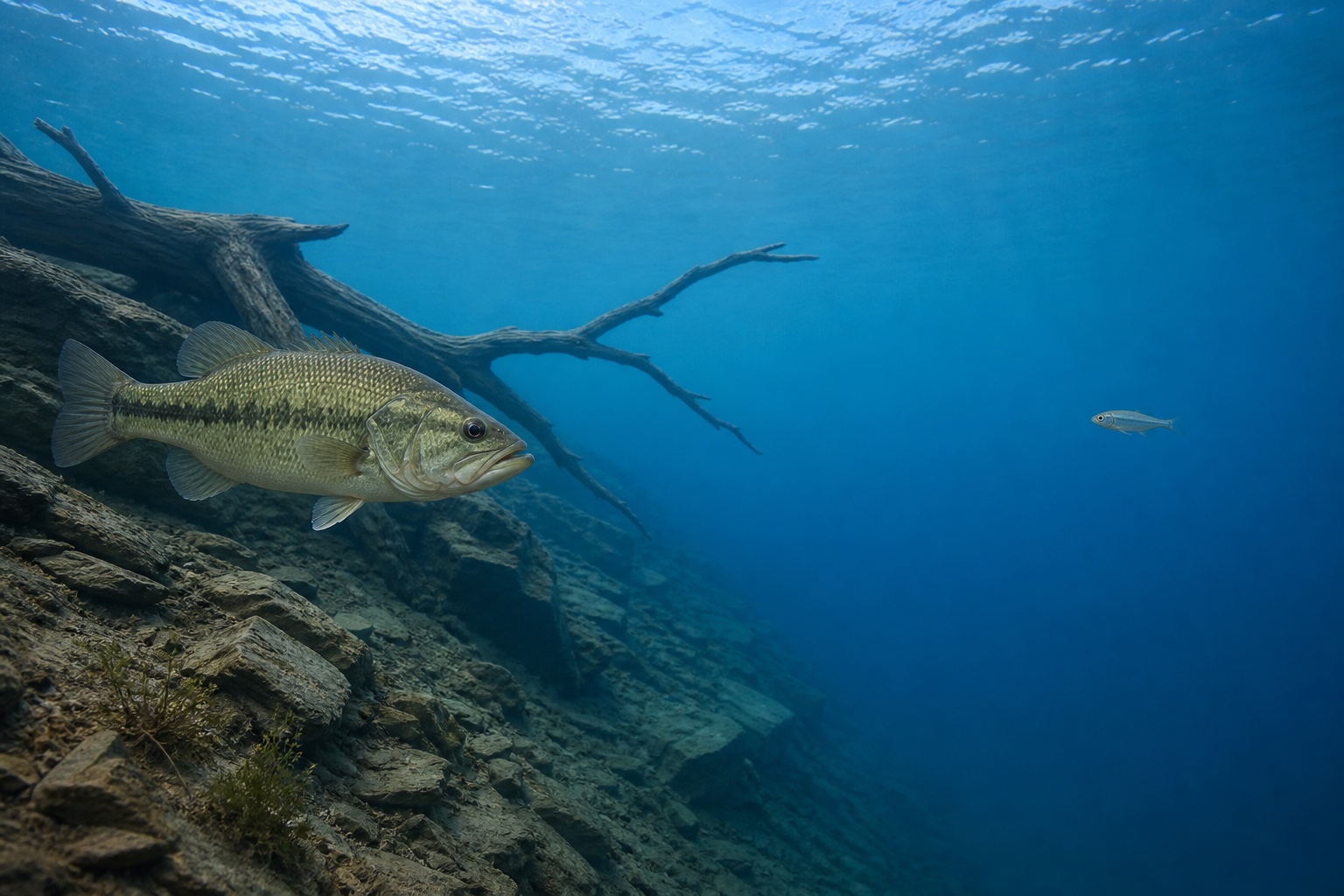
Largemouth bass observing forage beside submerged wood in a lake
Module 02 | Recommended sequence

Bass Biology

Understand largemouth, smallmouth, and spotted bass as animals, from species identity and anatomy through life history and movement.

  • Black bass species and identification
  • External and functional anatomy
  • Locomotion and buoyancy
  • Sensory systems
Start this module
Complete curriculum

Thirteen modules. One connected knowledge base.

Every module is included with Academy access. Members can follow the sequence or return to an earlier module for review.

Knowledge base 01

Know the fish, food, and cover

Build the biological foundation, then learn the forage and cover ingredients bass can use before interpreting complete waterbody systems.

01Fishing Decision FoundationsEstablish the practical decision framework that connects the rest of the Academy.IncludedView topics
Module purpose

Establish the practical decision framework that connects the rest of the Academy.

Start interactive module
Major topics
  1. 01Pattern fishing
  2. 02Fishing decision fundamentals
  3. 03Building a useful starting plan
  4. 04Separating observations from assumptions
  5. 05Changing one meaningful variable
  6. 06Knowing when to stay, adjust, or leave
02Bass BiologyUnderstand largemouth, smallmouth, and spotted bass as animals, from species identity and anatomy through life history and movement.IncludedView topics
Module purpose

Understand largemouth, smallmouth, and spotted bass as animals, from species identity and anatomy through life history and movement.

Start interactive module
Major topics
  1. 01Black bass species and identification
  2. 02External and functional anatomy
  3. 03Locomotion and buoyancy
  4. 04Sensory systems
  5. 05Physiology and oxygen exchange
  6. 06Feeding sequence and digestion
  7. 07Growth and life stages
  8. 08Reproduction and parental care
  9. 09Behavior and ecology
  10. 10Movement scales and home range
  11. 11Integrated biological profile
03ForageUnderstand where feeding opportunities occur and why prey behavior can change the value of an area.IncludedView topics
Module purpose

Understand where feeding opportunities occur and why prey behavior can change the value of an area.

Start interactive module
Major topics
  1. 01Threadfin shad
  2. 02Gizzard shad
  3. 03Blueback herring where applicable
  4. 04Alewife where applicable
  5. 05Bluegill and other sunfish
  6. 06Crappie and perch
  7. 07Crawfish
  8. 08Minnows
  9. 09Gobies where relevant
  10. 10Regional forage
  11. 11Habitat and movement
  12. 12Spawning and feeding behavior
  13. 13Schooling and bass interaction
  14. 14Energy reward versus effort
04VegetationRecognize important vegetation types, their growth forms, and the irregularities that can concentrate forage or create usable cover.IncludedView topics
Module purpose

Recognize important vegetation types, their growth forms, and the irregularities that can concentrate forage or create usable cover.

Start interactive module
Major topics
  1. 01Vegetation versus structure
  2. 02Hydrilla
  3. 03Milfoil
  4. 04Eelgrass
  5. 05Coontail
  6. 06Pondweed
  7. 07Reeds
  8. 08Pads
  9. 09Hyacinth and other regional vegetation
  10. 10Growth forms, depth, and seasonal development
  11. 11Edges, holes, points, and isolated clumps
  12. 12Mixed vegetation
  13. 13Forage and bass-use functions
  14. 14Identification limits and stewardship
05Other CoverUnderstand how nonvegetative objects and materials create focused places within a broader environment.IncludedView topics
Module purpose

Understand how nonvegetative objects and materials create focused places within a broader environment.

Start interactive module
Major topics
  1. 01Cover versus structure
  2. 02Laydowns
  3. 03Timber
  4. 04Stumps
  5. 05Brush
  6. 06Rock, boulders, and hard spots
  7. 07Riprap
  8. 08Docks and pilings
  9. 09Shell
  10. 10Other human-made cover
  11. 11Shade, gaps, orientation, and edges
  12. 12Isolated versus continuous cover
  13. 13Forage and bass-use functions
  14. 14Recognition limits and change over time
Knowledge base 02

Understand and read the water

Connect waterbody systems, changing conditions, seasonal context, physical structure, and map representations before planning a search.

06Lake Fundamentals and ConditionsUnderstand how waterbody types and changing physical conditions shape the habitat and evidence available to an angler.IncludedView topics
Module purpose

Understand how waterbody types and changing physical conditions shape the habitat and evidence available to an angler.

Start interactive module
Major topics
  1. 01Natural lakes
  2. 02Reservoirs
  3. 03River systems
  4. 04Highland and lowland reservoirs
  5. 05Grass-dominated and clear-water systems
  6. 06Tidal and current-influenced systems
  7. 07Waterbody zones and connectivity
  8. 08Water temperature and recent trend
  9. 09Dissolved oxygen, stratification, and turnover
  10. 10Water clarity and light penetration
  11. 11Water level and trend
  12. 12Current, inflow, outflow, and generation as general system processes
  13. 13Wind, weather trend, cloud cover, and time of day
  14. 14Atmospheric and fishing pressure as limited context
  15. 15Measurements, provenance, and interpretation limits
07Seasonal BehaviorUse seasonal phase as context for likely movements and patterns without treating the calendar as a guarantee.IncludedView topics
Module purpose

Use seasonal phase as context for likely movements and patterns without treating the calendar as a guarantee.

Start interactive module
Major topics
  1. 01Winter
  2. 02Prespawn
  3. 03Spawn
  4. 04Postspawn
  5. 05Summer
  6. 06Fall
  7. 07Seasonal transitions
  8. 08Overlapping and secondary seasonal patterns
  9. 09Regional and waterbody variation
  10. 10Forage spawning events
08StructureRead the bottom features that create travel, staging, feeding, and escape opportunities.IncludedView topics
Module purpose

Read the bottom features that create travel, staging, feeding, and escape opportunities.

Start interactive module
Major topics
  1. 01Points and secondary points
  2. 02Channels and channel swings
  3. 03Ditches and drains
  4. 04Ledges
  5. 05Flats
  6. 06Humps
  7. 07Saddles
  8. 08Shelves
  9. 09Bluff walls
  10. 10Roadbeds
  11. 11Creek mouths
  12. 12Inside and outside turns
  13. 13High spots and structural intersections
  14. 14Other meaningful structural features
09Contour ReadingTranslate chart lines into physical terrain, access routes, and areas worth investigating.IncludedView topics
Module purpose

Translate chart lines into physical terrain, access routes, and areas worth investigating.

Start interactive module
Major topics
  1. 01Understanding contour spacing
  2. 02Recognizing structure
  3. 03Migration routes
  4. 04Wintering areas
  5. 05Spawning areas
  6. 06Staging areas
  7. 07Offshore areas
  8. 08Chart limitations and changing water levels
10Finding BassCombine the knowledge base into an efficient search instead of fishing every plausible place.IncludedView topics
Module purpose

Combine the knowledge base into an efficient search instead of fishing every plausible place.

Start interactive module
Major topics
  1. 01Eliminating water
  2. 02Map study
  3. 03Seasonal starting points
  4. 04Efficient searching
  5. 05Evidence gathering
  6. 06Location ranking
  7. 07Pattern development
  8. 08Move-on rules
Knowledge base 03

Use the tools and execute

Gather better evidence and choose tackle, rigging, and presentations according to the job they need to perform.

11ElectronicsLearn universal sonar concepts, configure the view, and interpret what the display supports without overstating it.IncludedView topics
Module purpose

Learn universal sonar concepts, configure the view, and interpret what the display supports without overstating it.

Start interactive module
Major topics
  1. 01Traditional 2D sonar
  2. 02Down Imaging
  3. 03Side Imaging
  4. 04Forward Facing Sonar
  5. 05Sonar physics and transducers
  6. 06Frequency and beam geometry
  7. 07Range and target separation
  8. 08Sensitivity and contrast
  9. 09Color palettes and perception
  10. 10Scroll speed and boat speed
  11. 11Bass-sized targets versus bait-like returns
  12. 12Bottom hardness
  13. 13Vegetation, wood, rock, and structure
  14. 14Noise rejection, interference, and installation artifacts
  15. 15Thermocline-like layers, bubbles, and suspended clutter
  16. 16Verification passes and interpretation limits
12TackleSelect equipment by function, control, depth, cover, and the demands of the presentation.IncludedView topics
Module purpose

Select equipment by function, control, depth, cover, and the demands of the presentation.

Start interactive module
Major topics
  1. 01Rods
  2. 02Reels
  3. 03Line
  4. 04Gear ratios
  5. 05Rod power
  6. 06Rod action
  7. 07Line characteristics
  8. 08Lure families
  9. 09Rigging
  10. 10Presentation control
13Presentations and RigsLearn presentations through when, where, why, and how rather than through product promotion.IncludedView topics
Module purpose

Learn presentations through when, where, why, and how rather than through product promotion.

Start interactive module
Major topics
  1. 01Texas Rig
  2. 02Carolina Rig
  3. 03Drop Shot
  4. 04Neko Rig
  5. 05Ned Rig
  6. 06Wacky Rig
  7. 07Umbrella Rig
  8. 08Donkey Rig
  9. 09Free Rig
  10. 10Tokyo Rig
  11. 11Jighead minnow
  12. 12Hover and mid-strolling concepts
  13. 13Depth, speed, angle, cadence, and contact
  14. 14When to change presentation variables
Built for understanding

The format serves the subject.

  1. 01Focused instruction

    Learn the essential features, vocabulary, relationships, and practical limits.

  2. 02Premium visual study

    Use realistic lake scenes and purpose-built imagery to see the subject clearly.

  3. 03Interactive application

    Compare and apply concepts through focused, useful interactions.

  4. 04Module exam

    Answer specific questions about the knowledge taught in that module.

Lifetime Academy access

Get Academy access for $20.

Pay once to open the 13-module curriculum, four interactive Labs, assessments, saved progress, and your Academy notebook.

One-time purchase. Lifetime Academy access.